| Types of Light |
|
||||||||
|
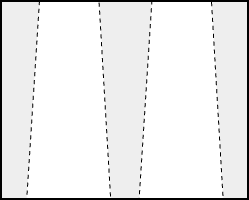
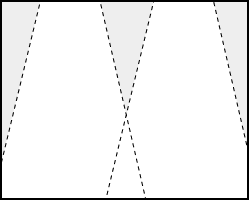
Rooflights are not only the most effective way of allowing natural light into a building, they can also determine the type and amount of light entering the building. Direct or Diffused Direct Light ? As the name suggests light passes through the rooflight without any disruption or interference, entering the structure as a straight beam. It therefore gives strong light in a given area but less general light in the surrounding area. It is useful where strong light is required in an area for close detailed work such as painting, or in situations where a very natural environment is desired, or the designer wants people in the building to see the sky through the roof. Direct light will result in shadows and glare on sunnier days. Polycarbonate, PVC and glass in clear and most tinted options provide direct light. Diffused Light ? As the light passes through the rooflight it is scattered giving a much more even distribution of light into the structure below. It is useful when the requirement is for ambient lighting over a large area with minimal shadows. Most industrial, commercial and sporting facilities prefer diffused light for these qualities. GRP in all forms, Polycarbonate, PVC, and Glass in patterned and opal tinted forms provide diffused light. If a material providing direct light and one providing diffused light into the building have the same light transmission, they will let the same amount of light into the building, it is simply distributed differently. |