|
|
| ? |
|
? |
| ? |
There is a wide range of metal and fibre cement roof cladding systems and flat roof membrane systems in the market. The type of system, building design and usage will influence the choice of rooflight.
Rooflights are very effective options for delivering natural daylight deep into the interior areas of industrial, commercial, recreational and agricultural buildings.
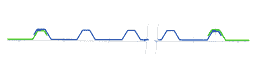
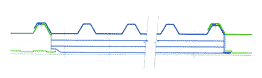
In its simplest form the rooflight is made to the same profile shape as the metal or fibre cement sheet, and simply replaces the opaque sheet as an in plane rooflight. In some cases the metal sheet design is not ideal to replicate in rooflight material, and a better solution is to raise the rooflights out of plane from the rest of the roof. For all flat roof systems, out of plane rooflights will be the norm.
In Plane Rooflights
 |
|
| 1. Single Skin Rooflight |
? |
|
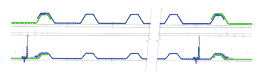
2. Site Assembled Double Skin Rooflight
This type of construction consists generally of a shallow profiled rooflight sheet to match the metal liner, a spacer system, perimeter closure and an outer rooflight sheet matching the metal weather sheet. This fully compliments the assembly of the metal roof. |
? |
|
| ? |
? |
? |
| ? |
? |
? |
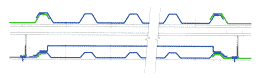
3. Site Assembled Triple Skin Rooflight
A typical assembly of three site assembled rooflight sheets, where the internal sheet could be replaced with a transparent insulation core. |
? |
|
| ? |
? |
? |
| ? |
? |
? |
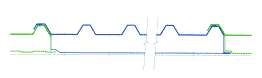
4. Factory Assembled Double Skin Rooflight
A factory made and assembled unit using purpose designed box assembly of rooflight sheeting. It incorporates a rigid spacer at the purlin line to provide a secure fixing assembly. The units are designed to match and compliment metal composite panels. |
? |
|
| ? |
? |
? |
| ? |
? |
? |
5. Factory Assembled Triple and Multi Skin and Insulated Core Assembly
A typical unit of outer skin and lining panel to match the metal composite, with one or multiple layer or transparent insulation internal to the box, of various designs to provide the requisite U-value. |
? |
|
Top of page
Out of Plane Rooflights
These rooflights are designed for use on flat roofs, or where the roof pitch is less than 20 degrees.
They can be supplied in a wide variety of materials, with a vast range of options. These include curbs and upstands with ventilation options for use with different roof coverings/constructions.
 |
|
6a. Dome Rooflight
A dome or pyramid in double or triple skin format manufactured from standard sizes, but can also be purpose made to suit existing upstand dimensions. |
? |
|
| ? |
? |
? |
| ? |
? |
? |
6b. Rooflight with Manufacturer?s Curb
A dome or pyramid with integral upstand manufactured to standard sizes, but can also be purpose made to suit exiting opening roof sizes. Other upstand heights can be supplied to accommodate various depths of roof insulation. Ventilator options not shown. |
? |
|
| ? |
? |
? |
| ? |
? |
? |
6c. Dome Rooflight with Manufacturer?s Adaptor Curb
A dome or pyramid with integral adaptor curb usually manufactured to suit existing upstands. Ventilator options not shown. |
? |
|
| ? |
? |
? |
| ? |
? |
? |
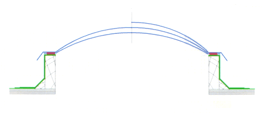
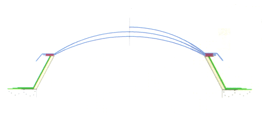
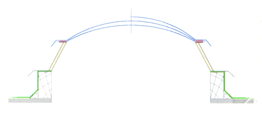
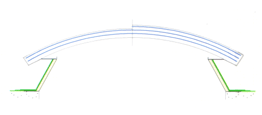
6d. Barrel Vault Rooflight
A low profile or semi circular barrel vaulted rooflight in solid or multi-wall, double or triple skin format and normally manufactured to suit specified dimensions. Can be supplied to suit builders upstand or with other upstand heights to accommodate various depths of roof insulation. Ventilator options not shown. |
? |
|
Top of page
Stuctural Glazing
Bespoke structures of almost any shape can be designed using proprietary glazing systems. These usually comprise aluminium or steel glazing bars with polycarbonate or glass glazing.
Top of page
Material Types
Rooflight materials must allow light through, satisfy all durability, thermal, safety and fire requirements, and work with the roof covering material and/or the glazing system being used. The main rooflight materials in the UK are GRP, polycarbonate and glass, and to a far lesser extent PVC.
GRP
GRP remains the most versatile and commonly used profiled glazing material. Available to match virtually any metal or fibre cement sheet profile and ideal for barrel vault design. GRP offers excellent performance properties and provides high levels of diffused light into the building. In most industrial, sporting and commercial situations diffused light, which minimises glare and distracting shadows, is preferable. GRP sheets are produced in almost all profiles, and modern high quality GRP sheets incorporate UV absorbing surface protection which can virtually eliminate long term discolouration. In a very budget conscious world GRP is a very cost effective rooflight material.
Polycarbonate
Polycarbonate is a versatile material used extensively as a rooflight glazing. It has three sheet forms:
- Solid ? Flat or Domed
- Profiled
- Multiwall
The key properties of polycarbonate are common to all forms ? exceptional impact resistance, high levels of light transmission, good workability and good fire rating. All are commonly available in clear and tinted options, with clear and most tints providing direct light, while clear patterned and opal tint provides diffused light and gives a soft quality to the light. Co-extruded UV protection eliminates up to 99% of UV radiation, protecting materials and people beneath it. Each form also has its own particular characteristics and properties.
Solid polycarbonate offers good optical clarity and superb workability. It can be cold curved on site, is suitable for use with a variety of glazing bar systems and can be moulded into various shapes such as domes and pyramids.
Profiled polycarbonate matches profiled roof cladding and allows the sky above to be seen through a corrugated material, a feature popular with many designers. It has very good profile accuracy and is available in a growing profile range. Extrusion and vacuum forming techniques allow a huge variety of profiles to be produced.
Multiwall polycarbonate is an insulating glazing material. Thicker sheets with more walls achieve the highest thermal performance, typically 1.6W/m2K for a 25mm five wall sheet. Structured polycarbonate is most commonly used in most domestic and many commercial conservatories. Like solid polycarbonate it can be cold curved on site, although to a much lesser degree, it can be used in a variety of glazing bar systems, and has a very high strength to weight ratio making it ideal for the creation of glazing features.
Safety Glass
Most visibly used as roof glazing in large shopping centres but used widely in the more up market commercial sector and significantly in traditional pitched roofs. Flat glazed rooflights in typical flat roof applications are currently very fashionable.
Glass has excellent fire properties, good impact performance, very high light transmission and provides the mark against which the optical clarity of all other glazing media is commonly compared. It is widely acknowledged as having a very long life expectancy with no discolouration from UV degradation, and laminated versions provide a good level of reduction in UV transmittance. Glass can also be curved for use in barrel vault rooflights and supplied with various coatings, interlayers and surface treatments to provide coloured or textured surfaces to achieve obscure or diffused glazing, solar control and total UV protection to areas beneath the glazing.
PVC
PVC was used for industrial rooflight applications in the 1970s and 1980s, but has poorer impact resistance and weathering performance than other alternatives. PVC will not meet the non-fragility requirements without the addition of extra safety measures in the rooflight construction. It is now used very rarely in industrial or commercial applications, although it is a very popular DIY material. It is not expensive, has a reasonable strength to weight ratio and is straight forward to work with, thereby deserving its success as a DIY material for small, lowrise domestic projects.
Comparison Chart
|
|
? |
? |
? |
? |
? |
? |
? |
? |
? |
? |
|
Material
|
? |
GRP |
? |
Polycarbonate
Flat |
? |
Polycarbonate
Multi Wall |
? |
Safety Glass |
? |
PVC |
| ? |
? |
? |
? |
? |
? |
? |
? |
? |
? |
? |
|
|
? |
? |
? |
? |
? |
? |
? |
? |
? |
? |
|
Transparency
|
? |
Medium |
? |
Excellent |
? |
Medium |
? |
Excellent |
? |
Excellent |
|
|
? |
? |
? |
? |
? |
? |
? |
? |
? |
? |
|
Untinted Translucency
|
? |
Excellent |
? |
Good |
? |
Good |
? |
Medium |
? |
Medium |
|
|
? |
? |
? |
? |
? |
? |
? |
? |
? |
? |
|
Strength
|
? |
Excellent |
? |
Excellent |
? |
Excellent |
? |
Medium |
? |
Poor |
|
|
? |
? |
? |
? |
? |
? |
? |
? |
? |
? |
|
Fire Rating
|
? |
Class 0,1,3,4 |
? |
Class 0,1(Y) |
? |
Class 0,1(Y) |
? |
Class 0,1 |
? |
Class 1(Y) |
|
|
? |
? |
? |
? |
? |
? |
? |
? |
? |
? |
|
UV Resitance
|
? |
Good |
? |
Good |
? |
Good |
? |
Excellent |
? |
Medium |
|
|
? |
? |
? |
? |
? |
? |
? |
? |
? |
? |
|
Temperature Resistance
|
? |
Excellent |
? |
Good |
? |
Good |
? |
Good |
? |
Medium |
|
|
? |
? |
? |
? |
? |
? |
? |
? |
? |
? |
|
Thermal Insulation
|
? |
Good |
? |
Good |
? |
Good |
? |
Good |
? |
Good |
|
|
? |
? |
? |
? |
? |
? |
? |
? |
? |
? |
|
Sound Insulation
|
? |
Good |
? |
Good |
? |
Medium |
? |
Good |
? |
Good |
|
|
? |
? |
? |
? |
? |
? |
? |
? |
? |
? |
|
Rigidity
|
? |
Excellent |
? |
Good |
? |
Excellent |
? |
Excellent |
? |
Good |
|
|
? |
? |
? |
? |
? |
? |
? |
? |
? |
? |
|
Patterns
|
? |
No |
? |
Yes |
? |
No |
? |
Yes |
? |
No |
|
|
? |
? |
? |
? |
? |
? |
? |
? |
? |
? |
|
Colours
|
? |
Yes |
? |
Yes |
? |
Yes |
? |
Yes |
? |
Yes |
|
|
? |
? |
? |
? |
? |
? |
? |
? |
? |
? |
|
Cold Curving
|
? |
Good |
? |
Excellent |
? |
Good |
? |
No |
? |
Good |
|
|
? |
? |
? |
? |
? |
? |
? |
? |
? |
? |
|
Formability
|
? |
No |
? |
Excellent |
? |
No |
? |
No |
? |
Excellent |
|
|
? |
? |
? |
? |
? |
? |
? |
? |
? |
? |
Top of page
|
? |
|